
Periodontics / Gum Care
The Periodontology deals with gum disease, currently leading cause of loss of teeth in adults.
Periodontal disease affects the gums (gingivitis), the periodontal ligament and the supporting bone tissue for the dental roots (mild, moderate, severe periodontitis).
The Gingivitis is the first stage of periodontal disease. The gums become red, swollen and can bleed. At this stage, the disorder is still reversible, but, if left untreated, it can progress to a more severe form called periodontitis (formerly “pyorrhea”). The plaque and calculus are the main cause of gingivitis predisposing , with the presence of many bacteria and parasites in depth.
The Periodontitis is characterized by damage to the gums, bone and other structures that support the teeth. The cause of periodontitis are bacteria and parasites that attack the supporting tissue of the teeth (formation of periodontal pockets) causing mobility and, in severe cases, spontaneous fall or the need for extraction.
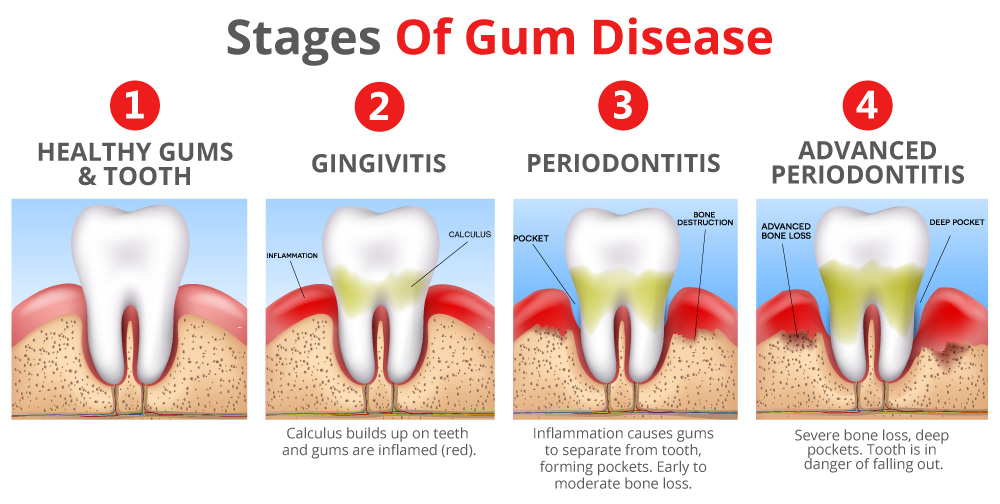
Symptoms that may suggest that the patient has periodontal problems:
- Gingival bleeding
- Red, swollen or sensitive gums
- Gums detached from the teeth
- Pus leaking gums
- Persistence of bad breath
- Dental mobility
- Displacement of teeth creating spaces between them.
How do you examine?
In the periodontal phase, if we carry out a periodontal probe with a millimeter probe (inserted between the tooth and the gum surrounding it), we will highlight the presence of periodontal pockets where further bacterial plaque accumulates and hygiene is difficult. The periodontal pocket is synonymous with damage to the supporting bone of the dentition: it is therefore very important to measure the depth of the bone pockets before and after periodontal treatments.